1900 - 1917
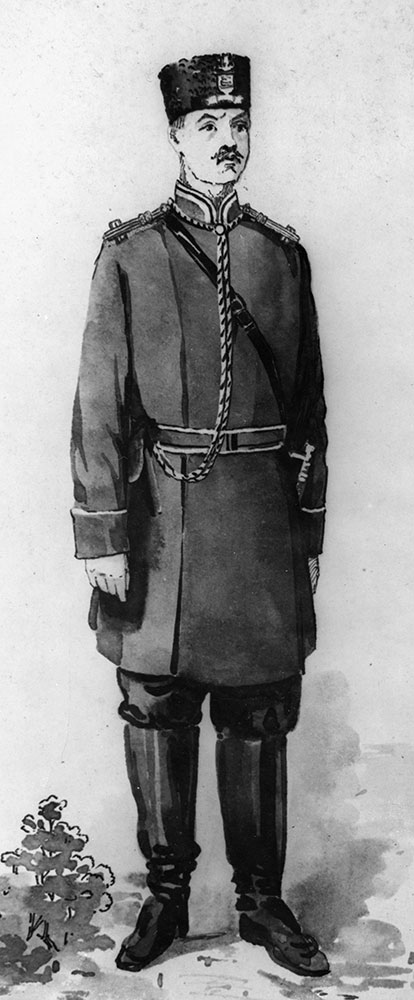
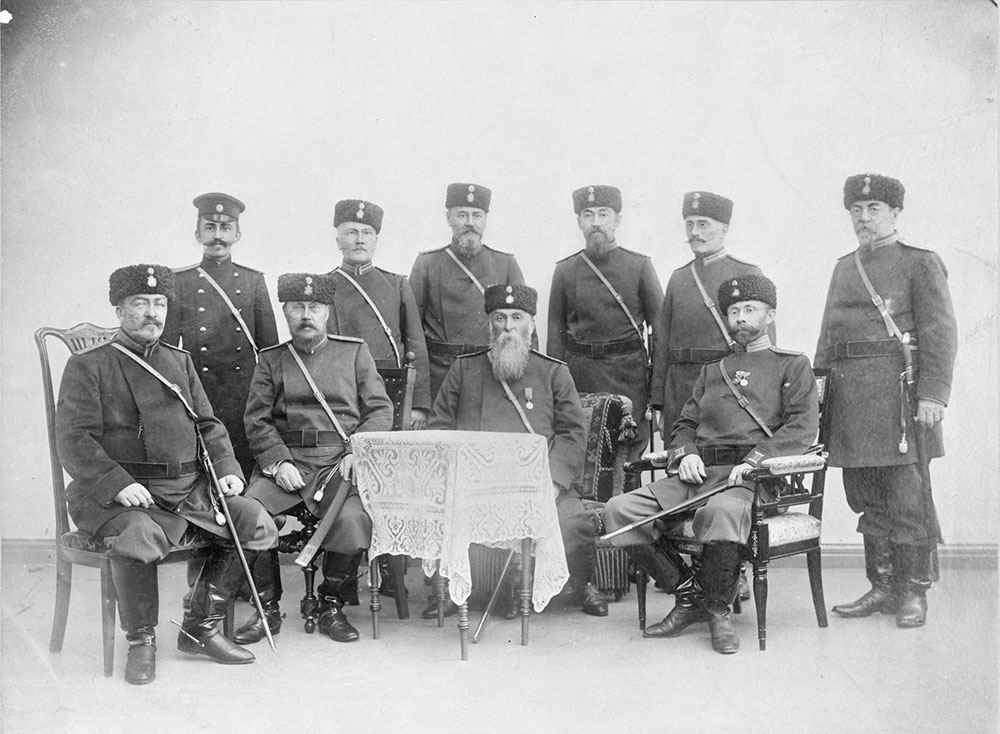
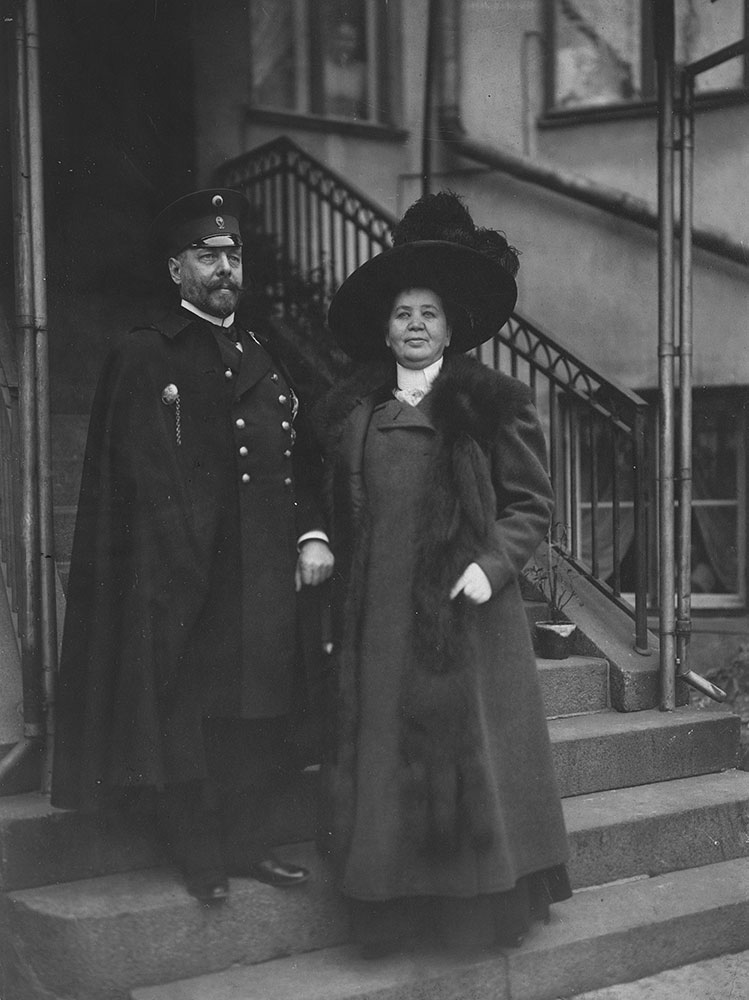
The beginning of the 20th century was characterised by increasing political tension. The imperial February Manifesto of 1899 marked the beginning of the so-called first period of russification of Finland. The Russian attempts to bring Finnish administration and culture closer to the Russian Empire had consequences for, among other things, how Finnish police officers were to dress. The countryside police uniform of 1900 was Russian in style, and in 1903, city police uniforms saw a similar change.
The uniform of 1903 resembled uniforms used by the Russian army and city policemen since the 1880s; this was the so-called old Russian style. The uniform of 1903 was virtually identical to the one introduced for the countryside police three years earlier. The uniform included a long dark green coat characterised by a broad front part fastened with concealed buttons as well as orange piping on the collar, cuffs and shoulder straps. The belt was black with an orange edge.
The countryside sheriffs were not affected by the uniform statute of 1900, but in 1903, their uniform was changed along with those of crown vogts and commanding officers of the city police. With these changes, virtually all police uniforms in the country had become Russian in style.
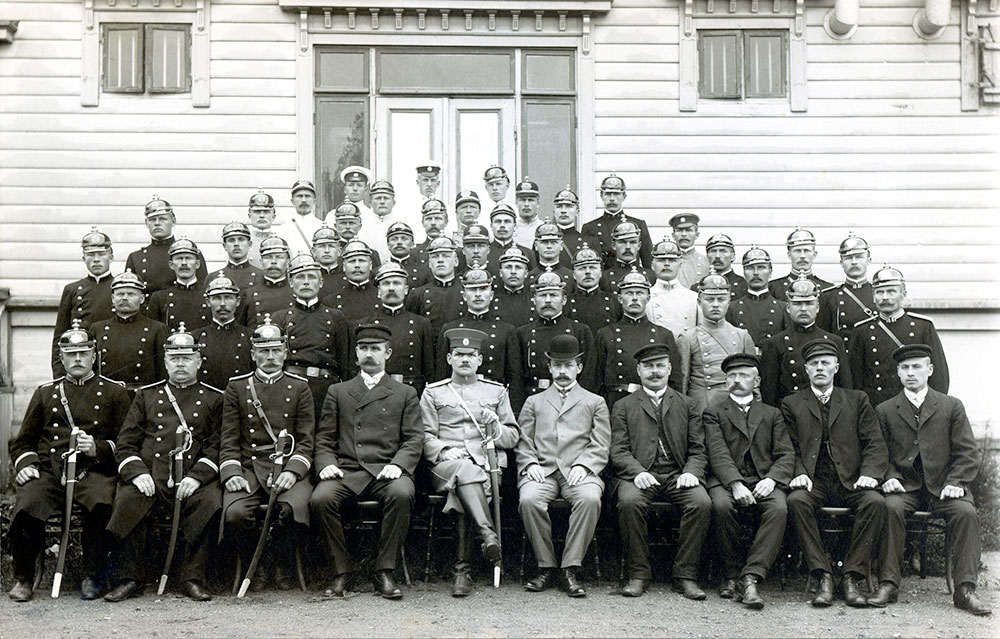
The uniform of 1903 never became popular among the police or the general public. It was scornfully called the “Bobrikoff uniform” after the unpopular Governor-General Nikolay Bobrikov, who was assassinated in the following year. This uniform was used for a few years only. The general strike of 1905 in Finland, which can be understood in the context of the Revolution of 1905 across Russia, along with weakening imperial ambitions to influence Finnish administration and culture, led to a new city police uniform being introduced in 1906. The new uniform was Western in style and dark blue in colour. A characteristic feature is the German-style pickelhaube, a spiked helmet covered with black fabric or leather. In this case, the metal spike was rounded rather than sharp.
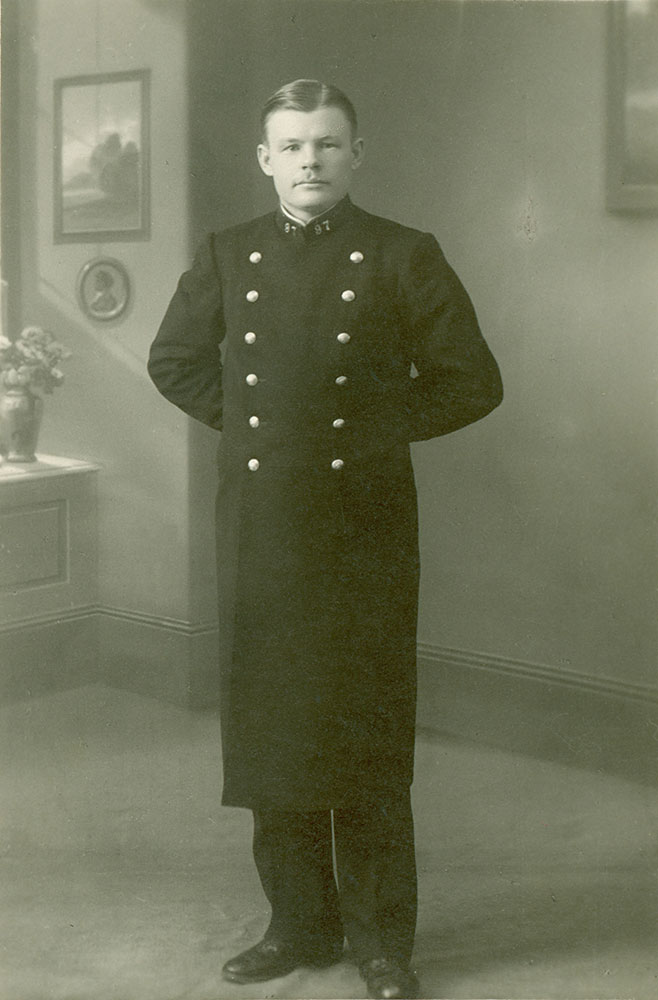
The uniform of the countryside police was similarly westernized in 1907. The new uniform was black in colour, and the coat had buttons in two rows. The collar was, unlike most police uniform collars of the time, folded downward. In addition, the collar and cuffs of the constable uniform had blue edges.
In 1908, the second period of russification of Finland began. This time, however, the style of Finnish police uniforms was affected more slowly. War between Germany and Russia (the eastern front of the First World War) broke out in August 1914. This was probably the reason why the German-style spiked helmet used by the Finnish city police was, in the following year, replaced with a black cap with a blue band.
Another Russian-style uniform, identical to the previous one from 1903, was introduced for urban police officers in 1916. This time, it was used for an even shorter period of time. Tsar Nicholas II was overthrown in March 1917, leading to a political vacuum in Finland that was not without consequences for law enforcement. The police departments found it difficult to continue functioning as usual, and in some cities, policing ceased completely. Some cities, among them Helsinki, attempted to establish a local law enforcement agency of its own, but due to general restlessness, the citizens opted for forming defence corps. These groups were politically partisan, and strong rivalry emerged between the left-wing Red Guards and the right-wing White Guards. Finland was moving toward independence due to the revolution in Russia, but the same political rivalry between Reds and Whites that was emerging in Russia was simultaneously bringing Finland closer to a civil war.