The 21st century
The uniform reform of 1999 changed both the items used as well as the entire uniform culture of the police force. The uniform items were divided into seven sets or wardrobes.
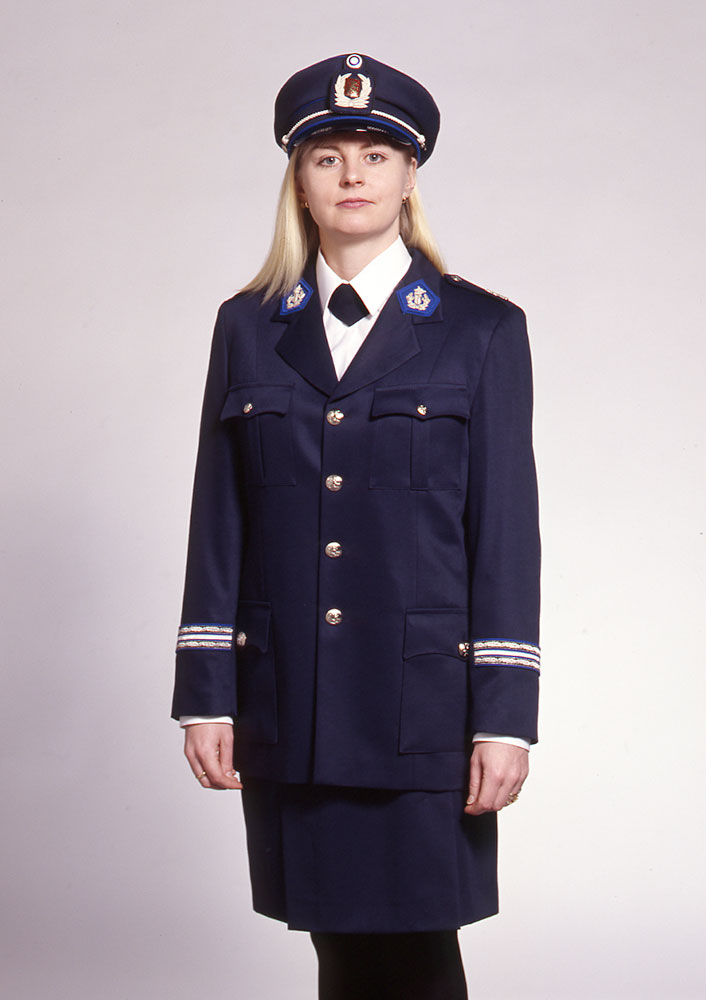
All uniformed officers had three wardrobes. The materials and other properties of the field set were designed for outdoor work and everyday use. The duty set was somewhat more elegant and was primarily designed for indoor work, but it could also to some extent be worn outdoors in summer. The visit set was for representation. The latter was, however, not a separate uniform, being the duty set with some modifications, including a white shirt.
The protective suit included a protective vest and reflective safety items. Specially designed suits were worn by members of certain units, including motorcycle and snowmobile officers. The wardrobe of boat officers included a float coat and shorts, the latter of which were also used by bicycle officers. Underwear and additional items also formed sets of their own. Moreover, this was the first time that a separate uniform for festive occasions was introduced.
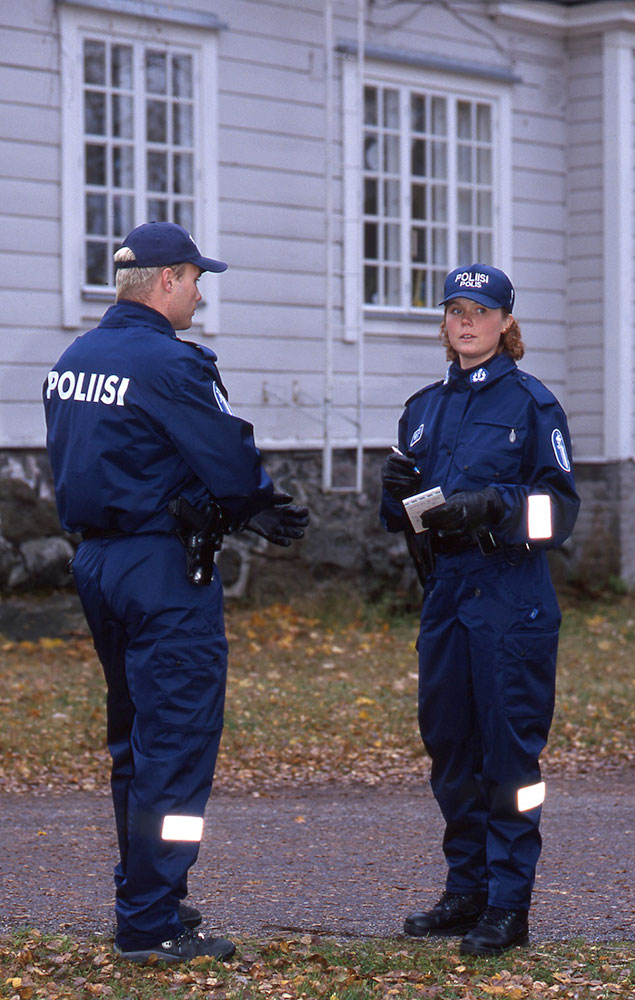
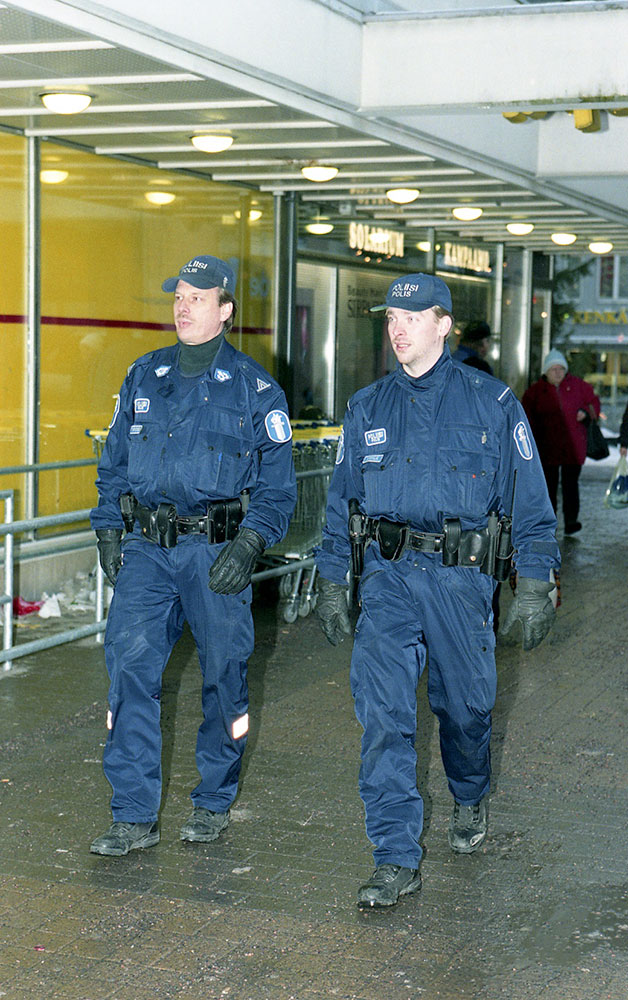
The new wardrobe was diverse indeed, but something was missing: coveralls for everyday police work. Separate coveralls had been introduced for special situations (the ERTI coveralls), crowd control (the JOUHA coveralls) and the bomb squad (the TEPO coveralls), but it was not permitted to wear these coveralls in everyday work. Since police officers requested general coveralls, their wishes were granted in 2002. Furthermore, lighter coveralls for summer use were introduced in 2007.
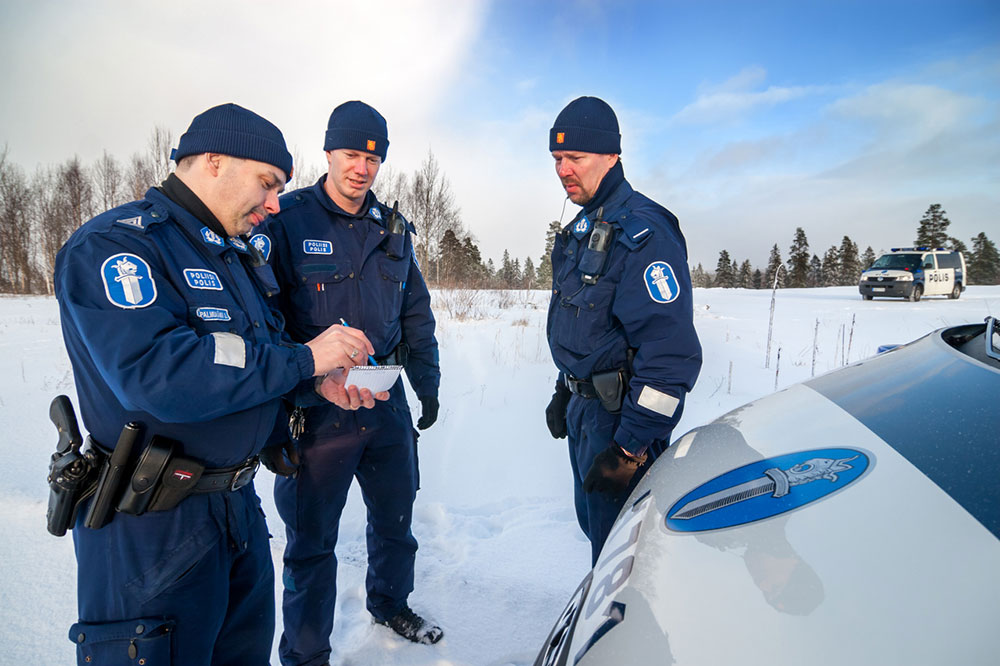
Uniform development continued in the 21st century. Feedback from the field was collected, and the development of vehicle and communication equipment was taken into account in new uniform designs. In the early years of the decade, the equipment belt, found to be inconvenient when sitting in cars and to cause back pain due to its weight, was developed in collaboration with the Kuopio Institute of Occupational Health. One of the new field uniform designs would allow officers to carry a VIRVE radio on the chest of their coat or shirt.
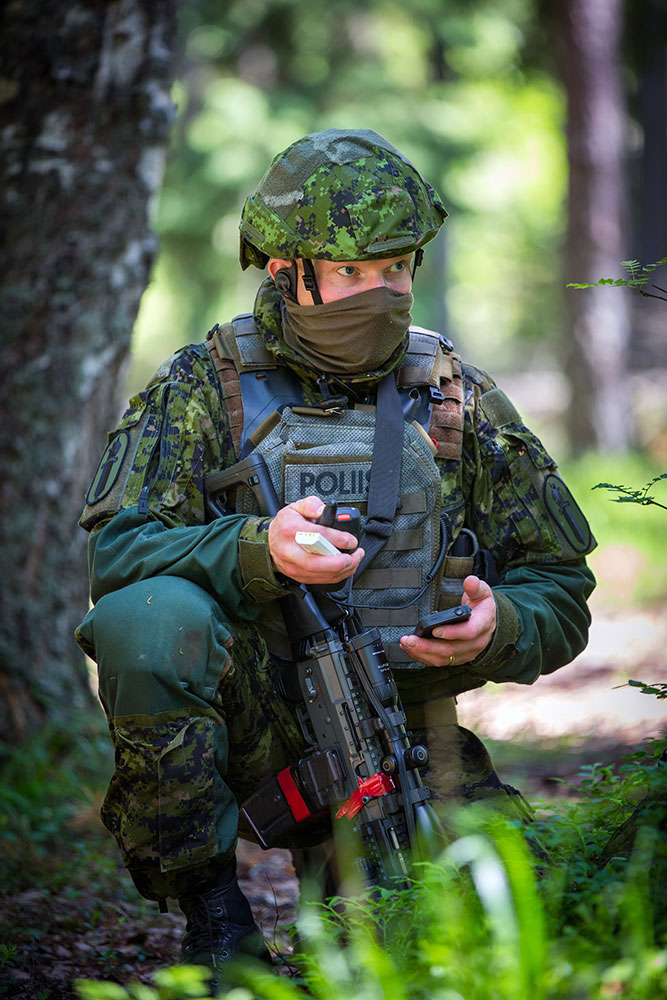
The design and materials of the field coveralls were changed in 2010, and they were simultaneously given a darker colour. Changes to the summer coveralls were enacted two years later. In the uniform statute of 2011, specific coveralls were introduced for units with special training for demanding situations, camouflage and snow coveralls, and modified bomb squad coveralls.
In early 2014, the Police Technical Centre was closed down, and its task of distributing police uniforms was taken over by the National Police Board. Currently, uniforms are delivered directly from the factory to the police units. In 2014, the entire production of police uniforms was put out to tender, and the contract was awarded to a single manufacturer for a period of four years. The work of the uniform committee of the 1980s was put on a permanent basis, and the committee is continually monitoring how uniforms are renewed, used and received in the field.