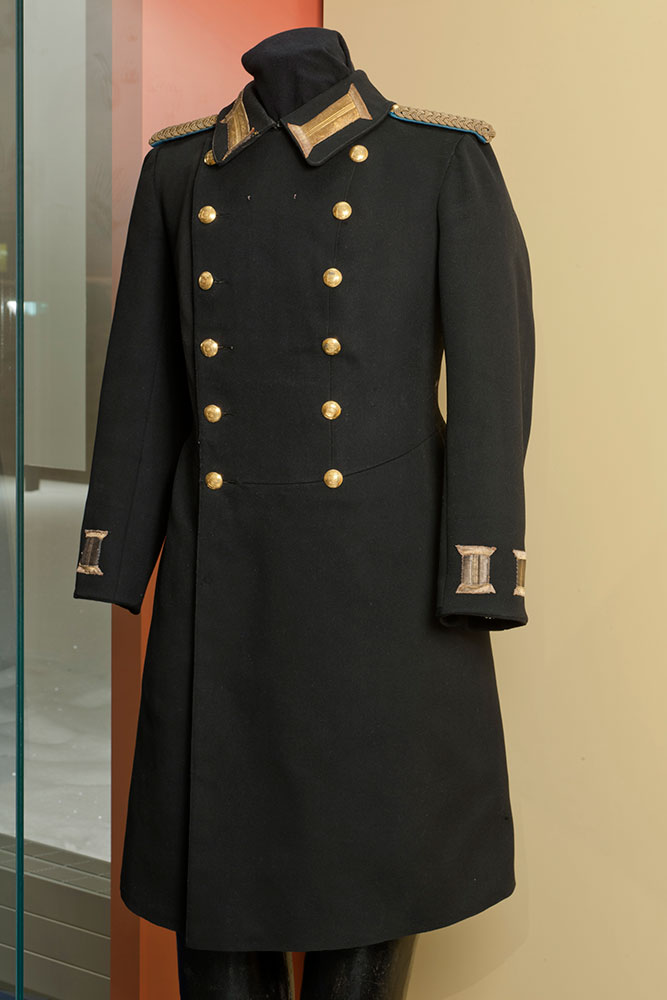
The sheriff uniforms of the 19th century followed the general uniform regulations for provincial servants. The sheriff uniform included an overcoat with buttons in two rows. Sheriff's overcoat on display at the Police Museum. This model was in use until 1903. Image: Museokuva Matti Huuhka.
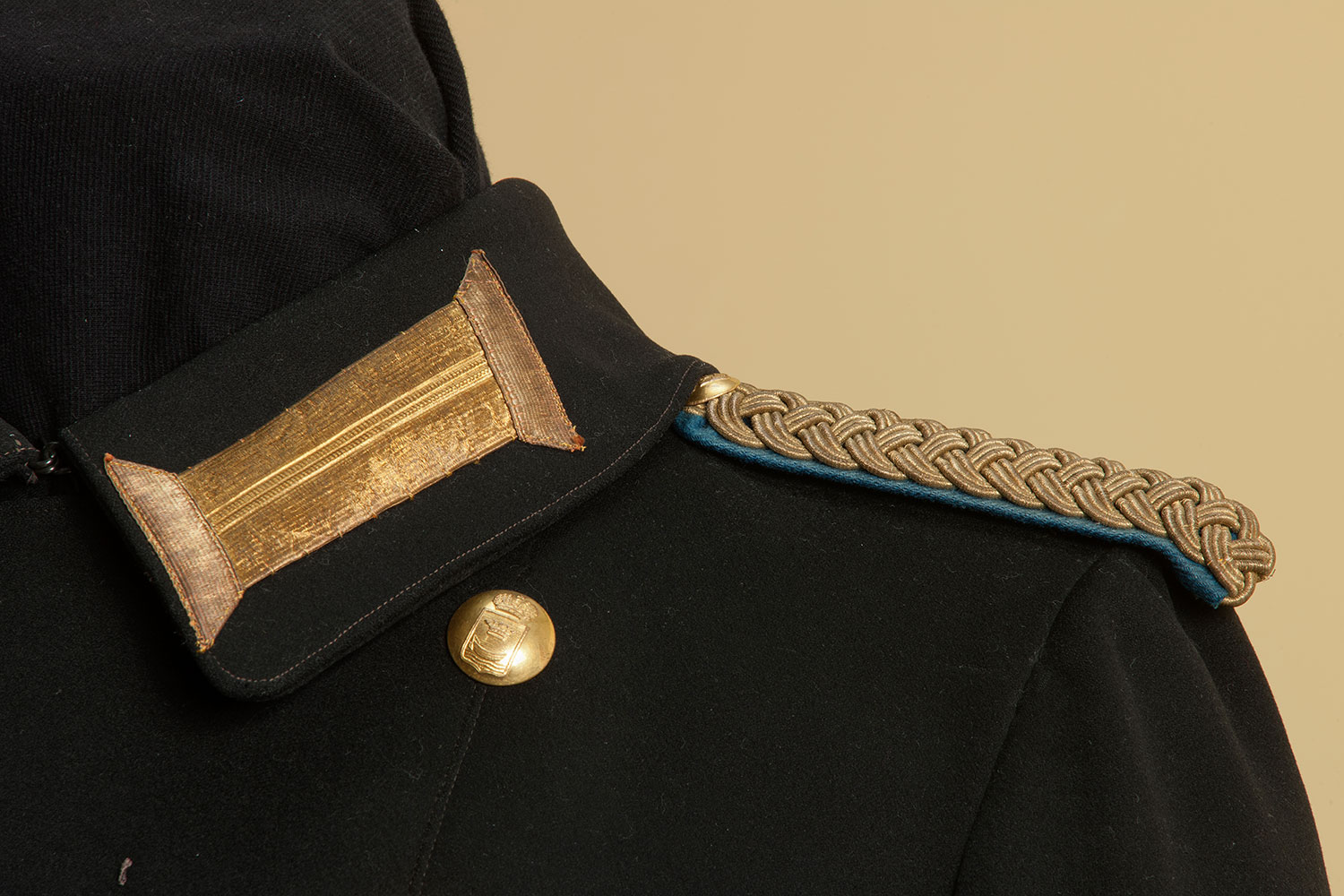
In the 19th and early 20th centuries, uniforms were expensive considering the salaries of provincial servants. This was mainly due to the materials used for rank insignia and other details. In the late 19th century, the sheriff's overcoat had gilded buttons featuring the provincial coat of arms, gilded braids on the shoulders and straps on the collar and cuffs. Image: Museokuva Matti Huuhka.
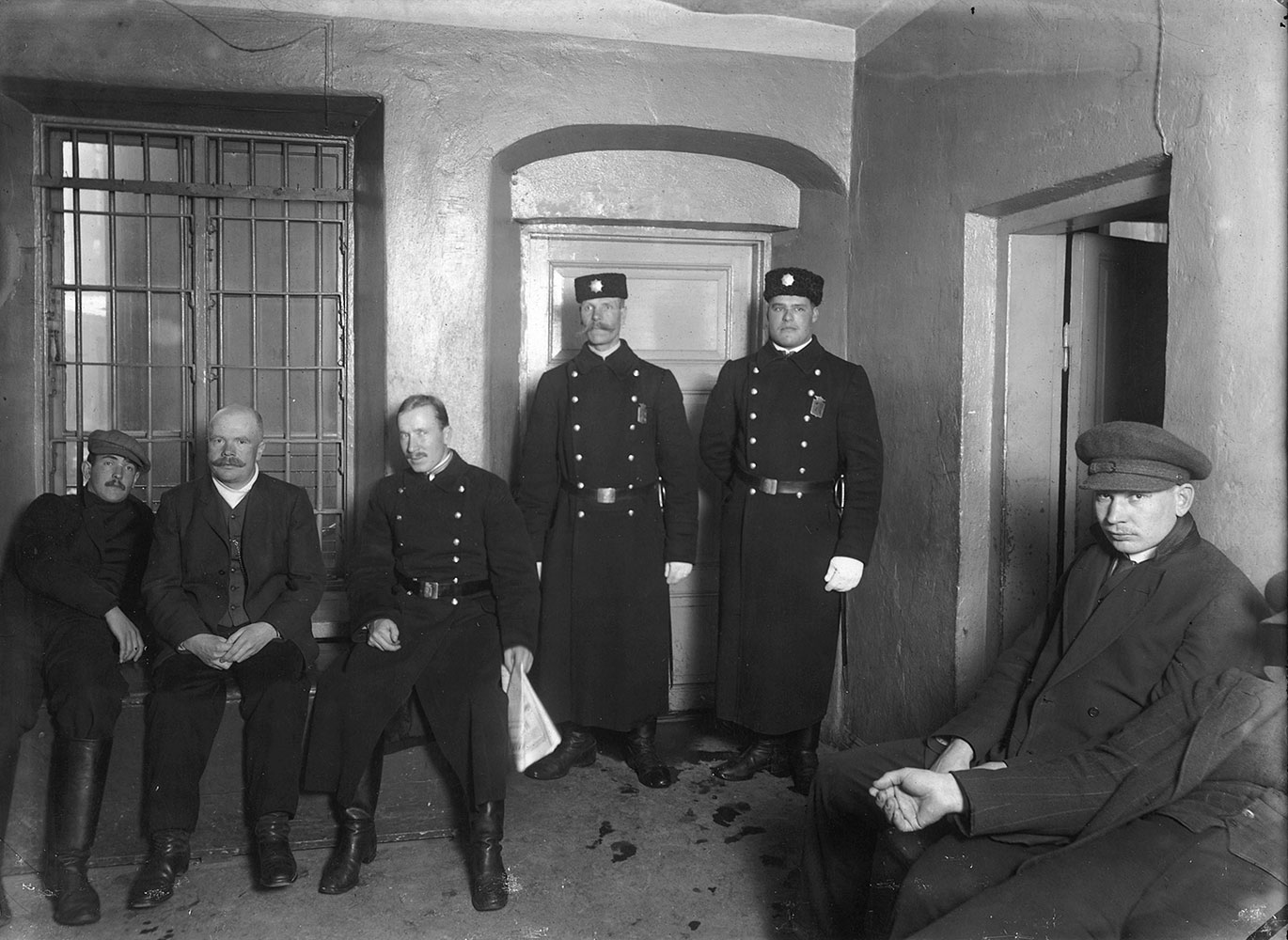
The police overcoats of the early 20th century were military in style, and in Finland they were called "mantteli" (from the German Mantel, overcoat) and "sinelli". The coats were usually made of thick woollen fabric and had buttons in two rows. The colour varied between dark grey and dark blue depending on the uniform statute. Constables and arrestees at a Helsinki jail, around 1910.
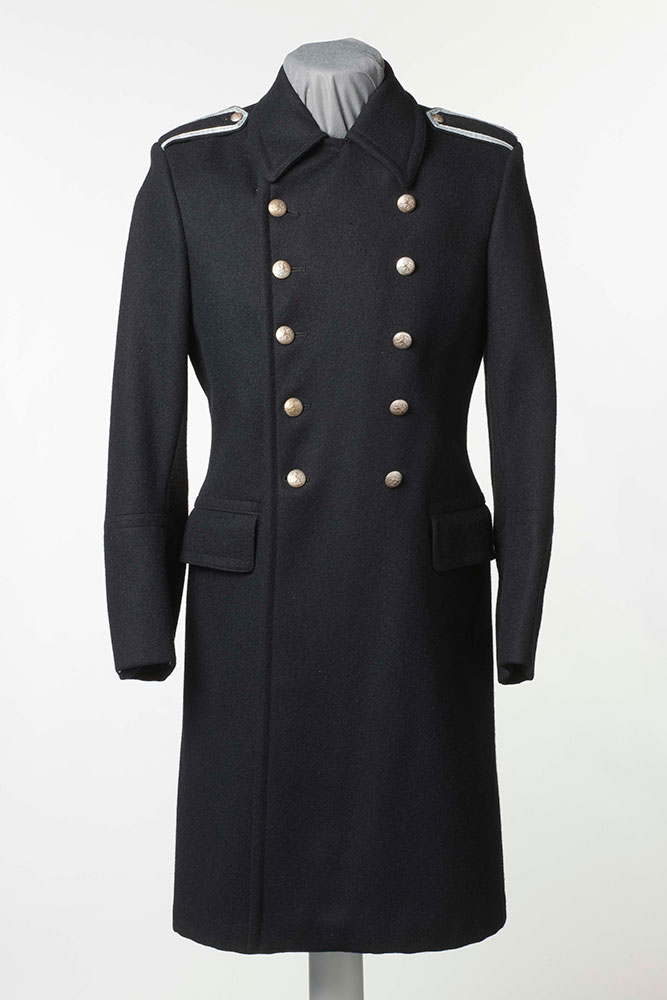
In the early years of Finnish independence (1917–), the police overcoat remained similar to the one used by city policemen at the beginning of the century. According to the uniform statute of 1923, the police coat was to be dark blue, feature buttons in two rows and have pockets sewn on the inside. The shoulder straps of ordinary constables lacked rank insignia, but instead featured a 5 mm wide silver stripe around the edges. Image: Museokuva Matti Huuhka.
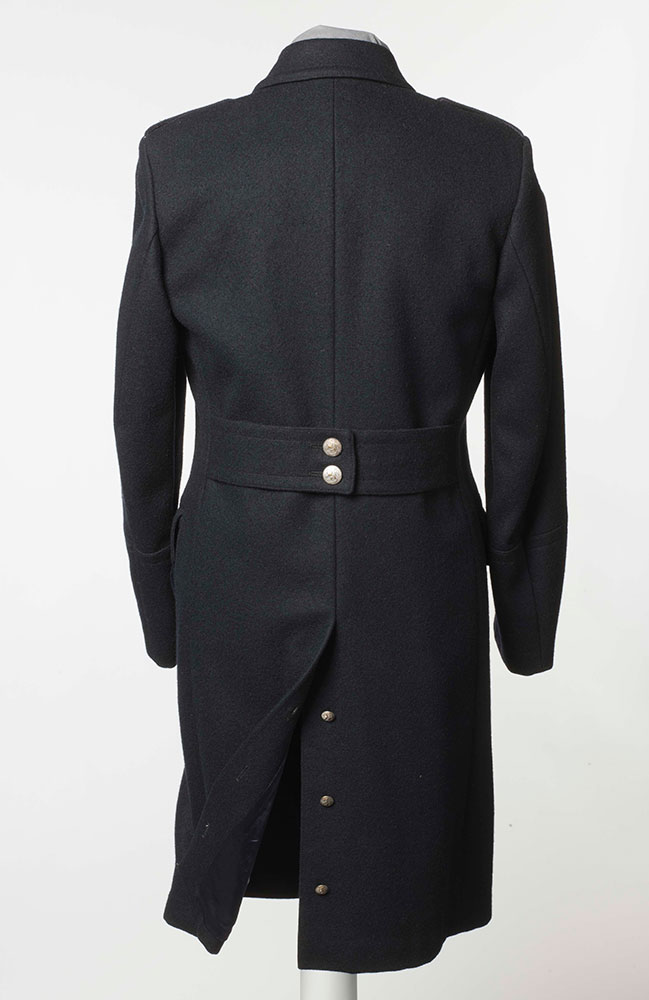
From 1923 onward, police coats had silver buttons featuring the coat of arms of Finland. From the 1920s until the 1970s, overcoats featured a split on the back hem. The purpose of the split was to facilitate fast movement, but when moving slowly, the split could be closed with small buttons. Image: Museokuva Matti Huuhka.
1 / 20